The Heart and Circulation
Format:
E-Book (pdf)
EAN:
9781447152774
Autor:
Branko Furst
Herausgeber:
Springer London
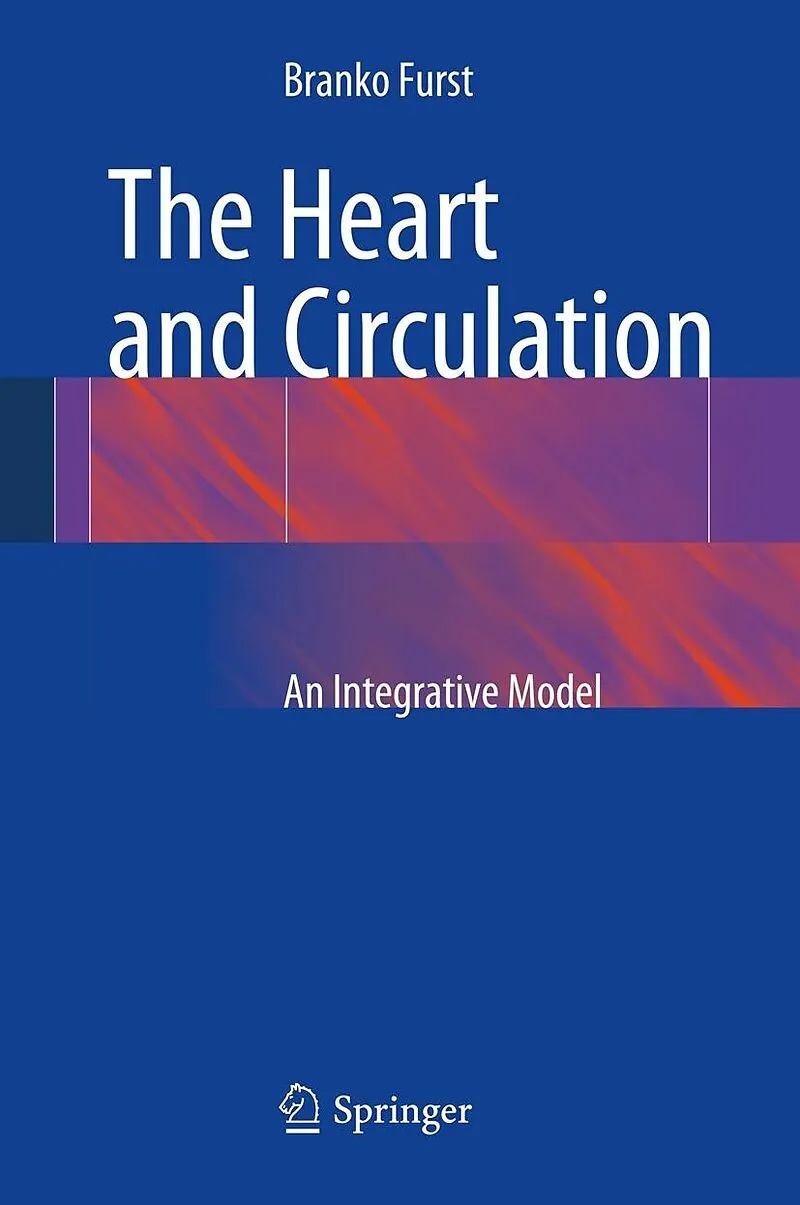
What drives the circulation? In this comprehensive review of existing circulation models, the conventional view that the heart is a pressure-propulsion pump is challenged. The existing models fail to explain an increasing number of observed circulatory phenomena. A unifying circulation model is proposed in which the blood, responding to metabolic demands of the tissues, is the primary regulator of cardiac output. This new model arises from accumulated clinical and experimental evidence. The heart, rather than being an organ of blood propulsion, assumes a secondary role and generates pressure by impeding the flow of blood. This is supported by examples from the fields of early embryonic circulation, comparative phylogeny, functional morphology, exercise physiology and a range of clinical scenarios. The Heart and Circulation: An Integrative Model offers a paradigm shift in the understanding of circulatory phenomena. It will become a valuable resource for all those clinicians, researchers, educators and students who, having been confronted with the paradox of the circulation, are looking for a broader interpretation.
Autorentext
Branko Furst, MD, FFARCSI, graduated from University of Ljubljana Medical School, Slovenia in 1978 and spent a year practicing family medicine. After completing a residency in anesthesiology at various London (UK) hospitals he worked a short time as an emergency room physician, and then continued his career in anesthesiology at Texas Tech University Health Sciences Center in El Paso, Texas. The author currently holds the position of Associate Professor in Anesthesiology at Albany Medical College, Albany, NY, where his time is shared between clinical work, resident teaching and research.
Zusammenfassung
This book traces the development of the basic concepts in cardiovascular physiology in the light of the accumulated experimental and clinical evidence and, rather than making the findings fit the standard pressure-propulsion mold, let the phenomena 'speak for themselves'. It starts by considering the early embryonic circulation, where blood passes through the valveless tube heart at a rate that surpasses the contractions of its walls, suggesting that the blood is not propelled by the heart, but possesses its own motive force, tightly coupled to the metabolic demands of the tissues. Rather than being an organ of propulsion, the heart, on the contrary, serves as a damming-up organ, generating pressure by rhythmically impeding the flow of blood. The validity of this model is then confirmed by comparing the key developmental stages of the cardiovascular system in the invertebrates, the insects and across the vertebrate taxa. The salient morphological and histological features of the myocardium are reviewed with particular reference to the vortex. The complex, energy-dissipating intracardiac flow-patterns likewise suggest that the heart functions as an organ of impedance, whose energy consumption closely matches the generated pressure, but not its throughput. Attention is then turned to the regulation of cardiac output and to the arguments advanced by proponents of the 'left ventricular' and of the 'venous return' models of circulation. Hyperdynamic states occurring in arteriovenous fistulas and congenital heart defects, where communication exists between the systemic and pulmonary circuits at the level of atria or the ventricles, demonstrate that, once the heart is unable to impede the flow of blood, reactive changes occur in the pulmonary and systemic circulations, leading to pulmonary hypertension and Eisenmenger syndrome. Finally, the key points of the nook are summarized in the context of blood as a 'liquid organ' with autonomous movement.
Inhalt
PART I Early Embryo Circulation.- Introduction.- Early Embryo Circulation Morphologic Features.- The Onset of Circulation.- Hemodynamics of the Early Embryo Circulation.- Flow Patterns in the Early Embryo Circulation.- Heart Vortex Formation.- Is There a Circulation Without a Heart? .- Embryo Heart is not a Peristaltic Pump.- Flow Perturbation Experiments.- Heart Rate Perturbations.- The Heart as Generator of Pressure.- Ventriculo-Vascular Interaction.- A Brief Comparative Phylogeny.- Evolutionary Aspect of the Rhythmical System.- PART II Mature Circulation.- Functional Morphology of the Heart.- Regulation of Cardiac Output.- Models of the Heart.- Cardiovascular Response during Exercise.- Hemodynamic Effects of Aortic Occlusion.- Increased Pulmonary Flows.- Single Ventricle Physiology.- Blood as an Organ.
Leider konnten wir für diesen Artikel keine Preise ermitteln ...
billigbuch.ch sucht jetzt für Sie die besten Angebote ...
Die aktuellen Verkaufspreise von 4 Onlineshops werden in Realtime abgefragt.
Sie können das gewünschte Produkt anschliessend direkt beim Anbieter Ihrer Wahl bestellen.
Loading...
Die aktuellen Verkaufspreise von 4 Onlineshops werden in Realtime abgefragt.
Sie können das gewünschte Produkt anschliessend direkt beim Anbieter Ihrer Wahl bestellen.
| # | Onlineshop | Preis CHF | Versand CHF | Total CHF | ||
|---|---|---|---|---|---|---|
| 1 | Seller | 0.00 | 0.00 | 0.00 |