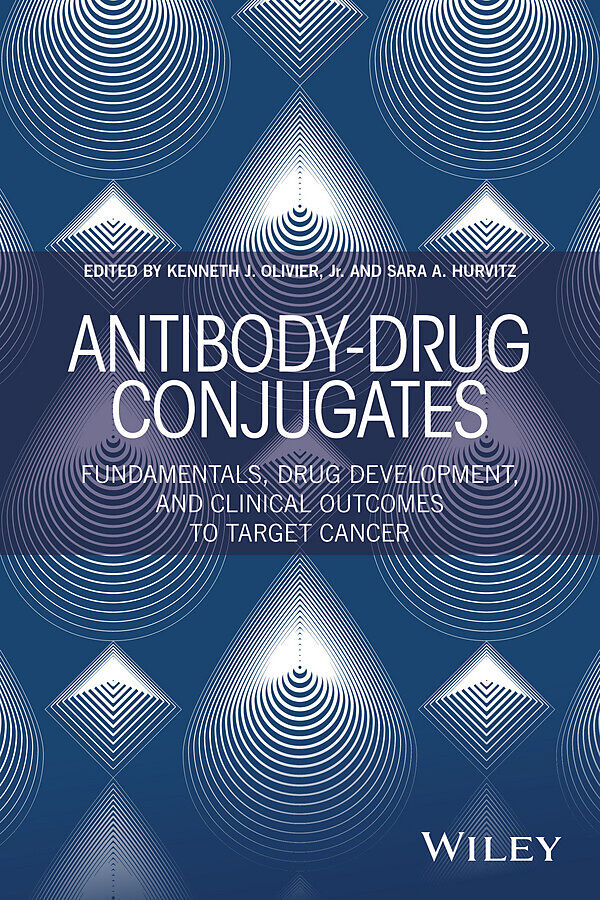
Antibody-Drug Conjugates
Einband:
E-Book (pdf)
EAN:
9781119060840
Herausgeber:
Wiley
Erscheinungsdatum:
14.11.2016
Providing practical and proven solutions for antibody-drug conjugate (ADC) drug discovery success in oncology, this book helps readers improve the drug safety and therapeutic efficacy of ADCs to kill targeted tumor cells. * Discusses the basics, drug delivery strategies, pharmacology and toxicology, and regulatory approval strategies * Covers the conduct and design of oncology clinical trials and the use of ADCs for tumor imaging * Includes case studies of ADCs in oncology drug development * Features contributions from highly-regarded experts on the frontlines of ADC research and development
Autorentext
Kenneth J. Olivier, Jr., PhD, is Head of Toxicology, Discovery Regulatory, Bioanalytical Assay Development, Pharmacokinetics and Discovery Project Management at Merrimack Pharmaceuticals and has over 13 years' experience in the biotechnology and pharmaceutical industries.
Sara A. Hurvitz, MD, is an Associate Professor of Medicine at the University of California, Los Angeles (UCLA); Co-Director of the Santa Monica-UCLA Outpatient Oncology Practice; Medical Director of the Clinical Research Unit of the Jonsson Comprehensive Cancer Center of UCLA; and Director of the Breast Oncology Program, Division of Hematology-Oncology, at UCLA.
Klappentext
Antibody-drug conjugates (ADCs) are a type of targeted therapy, used most notably for cancer, and consist of an antibody (or antibody fragment) linked to a payload drug which is often cytotoxic. Because of the targeting, the side effects should be lower and give a wider therapeutic window. By combining the unique targeting of antibodies with the cancer-killing ability of cytotoxic drugs, ADCs allow sensitive discrimination between healthy and diseased tissue leading to widespread enthusiasm in the oncology drug development community. Providing practical and proven solutions for ADC drug discovery success in oncology, Antibody-Drug Conjugates: Fundamentals, Drug Development, and Clinical Outcomes to Target Cancer helps readers improve the drug safety and therapeutic efficacy of ADCs to kill targeted tumor cells. Featuring contributions from highly-regarded experts on the frontlines of ADC research and development, the book covers the basics, chemistry and manufacturing (CMC) controls, nonclinical pharmacology and toxicology, clinical outcomes and regulatory approval strategies, and case studies from oncology drug discovery. Readers benefit through gaining an improved understanding of ADC fundamentals, strategies for targeted and tailored drug release, computational modelling practices, and insights into optimizing and assessing nonclinical studies and regulatory strategies. In addition, the chapters offer discussion on the conduct and design of oncology clinical trials, using ADCs to image tumors and guide clinical protocol development, and therapeutic regimens. Considering how expansive the field is and the potential benefit to researchers, clinicians, and ultimately patients, this comprehensive book with the newest cutting edge information offers a critical resource and reference for the growth of oncology drug development.
Inhalt
List of Contributors xvii Preface xxi Historical Perspective: What Makes AntibodyDrug Conjugates Revolutionary? xxiii Part I What is an AntibodyDrug Conjugate 1 1 Typical AntibodyDrug Conjugates 3
John M. Lambert 1.1 Introduction 3 1.1.1 A Simple Concept 3 1.1.2 Turning Antibodies into Potent Anticancer Compounds 4 1.1.3 What is a Typical ADC and How Does it Act? 4 1.1.4 Simple Concept, but Not So Simple to Execute 5 1.2 The Building Blocks of a Typical ADC 6 1.2.1 The Antibody 6 1.2.1.1 Antibody Isotype in ADCs 7 1.2.1.2 Functional Activity of the Antibody Moiety in ADCs 8 1.2.2 The Payload 9 1.2.2.1 DNA-Targeting Payloads 11 1.2.2.2 Payloads Targeting Tubulin 11 1.2.3 Linker Chemistries 12 1.3 Building an ADC Molecule 13 1.3.1 Conjugation of Payloads to Antibodies at Lysine Residues 13 1.3.2 Conjugation of Payloads to Antibodies at Cysteine Residues 17 1.4 Attributes of a Typical ADC 19 1.4.1 Structural Attributes of a Typical ADC 19 1.4.2 Functional Characteristics of a Typical ADC 20 1.4.2.1 In Vitro Properties 20 1.4.2.2 In Vivo Efficacy 20 1.4.2.3 Pharmacokinetics of ADCs 23 1.5 Summary 24 Acknowledgment 24 Abbreviations 25 References 25 Part II Engineering, Manufacturing, and Optimizing AntibodyDrug Conjugates 33 2 Selecting Optimal AntibodyDrug Conjugate Targets Using Indication-Dependent or Indication-Independent Approaches 35
Jay Harper and Robert Hollingsworth 2.1 Characteristics of an Optimal ADC Target 35 2.2 Indication-Dependent ADC Target Selection 40 2.3 Indication-Independent ADC Target Selection 48 2.4 Concluding Remarks and Future Directions 50 Acknowledgments 52 References 52 3 AntibodyDrug Conjugates: An Overview of the CMC and Characterization Process 59
Philip L. Ross and Janet Wolfe 3.1 Introduction 59 3.2 ADC Manufacturing Process 60 3.2.1 Conjugation 62 3.2.2 Conjugation NextGeneration Chemistry 64 3.2.2.1 Conjugation Novel Payloads 64 3.2.2.2 Conjugation Linker Design 65 3.2.3 mAb Engineering 66 3.2.4 Purification 68 3.2.5 Formulation 68 3.3 Characterization 70 3.3.1 Quality and Stability Testing 70 3.3.2 Biochemical and Microbiological Testing 74 3.3.3 Extended Characterization 74 3.4 Comparability 76 3.5 Concluding Remarks 76 Abbreviations 77 References 78 4 Linker and Conjugation Technology; and Improvements 85
Riley Ennis and Sourav Sinha 4.1 Overview 85 4.2 Noncleavable 86 4.3 Cleavable Linkers and SelfImmolative Groups 86 4.4 Differences in Therapeutic Window of Cleavable and Noncleavable Linkers 88 4.5 Improving Therapeutic Window with NextGeneration Linker Technologies 89 4.6 SiteSpecific Conjugation, Homogeneous Drug Species, and Therapeutic Window 91 4.7 Influence of Linkers on Pharmacokinetics and ADME 93 4.8 PEG Linkers to Optimize Clearance, Solubility, and Potency 93 4.9 Linkers to Optimize for Drug Resistance 94 4.10 Improving Solid Tumor Penetration with Linkers 96 4.11 Analytical Methods for Characterizing Linker Pharmacodynamics 96 4.12 Conclusion 98 References 99 5 Formulation and Stability 105
Kouhei Tsumoto, Anthony Young, and Satoshi Ohtake 5.1 Introduction 105 5.2 Stability Considerations for ADCs 106 5.2.1 Physical Stability 106 5.2.2 Chemical Stability 111 5.3 Formulation Approaches 115 5.4 Logistical Considerat...
Leider konnten wir für diesen Artikel keine Preise ermitteln ...
billigbuch.ch sucht jetzt für Sie die besten Angebote ...
Die aktuellen Verkaufspreise von 6 Onlineshops werden in Realtime abgefragt.
Sie können das gewünschte Produkt anschliessend direkt beim Anbieter Ihrer Wahl bestellen.
Loading...
Die aktuellen Verkaufspreise von 6 Onlineshops werden in Realtime abgefragt.
Sie können das gewünschte Produkt anschliessend direkt beim Anbieter Ihrer Wahl bestellen.
| # | Onlineshop | Preis CHF | Versand CHF | Total CHF | ||
|---|---|---|---|---|---|---|
| 1 | Seller | 0.00 | 0.00 | 0.00 |