Great Depression of the 1930s
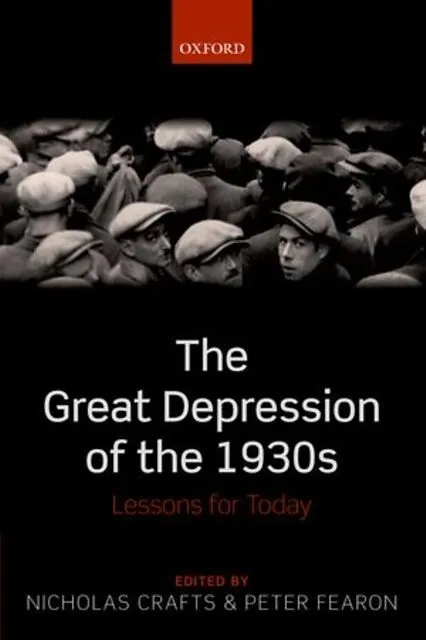
Einband:
Fester Einband
EAN:
9780199663187
Genre:
Business Encyclopedias
Autor:
Nicholas Crafts, Peter Fearon
Herausgeber:
Oxford University Press(UK)
Erscheinungsdatum:
01.05.2013
Zusatztext This is not an ordinary edited volume. Every paper seems to have been specially written for it and fits the title. Each views an aspect of the interwar era in light of theoretical and policy issues related to our own post-2008 depression, and draws explicit lessons... the volume includes many of the best economic historians working on the interwar era, scholars worth reading... all of the papers are admirably up to date on the current macroeconomics literature, including recent attempts to accounts for events of the 1930s in terms of real business cycle and New Keynesian models. Monetary policy at the zero bound, hysteresis in the natural rate of unemployment, recovery from a financial crisis and regulatory reforms, the euro and the gold standard? These and many other topics are well-covered. Informationen zum Autor Nicholas Crafts is Professor of Economic History at the University of Warwick and Director of the ESRC Competitive Advantage in the Global Economy Research Centre (CAGE). He has held positions at the London School of Economics, UC Berkeley, Stanford, and Oxford. He is a Fellow of the British Academy and has been a consultant to many organizations including HM Treasury, IMF, and the World Bank. Peter Fearon is Emeritus Professor of Modern Economic History at the University of Leicester. He has published widely on the great depression with a particular emphasis on the US economy and the New Deal. He has held visiting positions at the University of Cambridge, the University of Kansas, and La Trobe University. Klappentext This book brings together contributions written by internationally distinguished economic historians. The editors explore the current fascination with the 1930s great depression, and link it with the great recession which began in 2007 and still poses a threat to economic stability. Zusammenfassung This book brings together contributions written by internationally distinguished economic historians. The editors explore the current fascination with the 1930s great depression, and link it with the great recession which began in 2007 and still poses a threat to economic stability. Inhaltsverzeichnis 1: Nicholas Crafts and Peter Fearon: Depression and Recovery in the 1930s: An Overview 2: Nicholas Crafts and Peter Fearon: The 1930s: Understanding the Lessons 3: Nikolaus Wolf: Europe's Great Depression: coordination failure after the First World War 4: Albrecht Ritschl: Reparations, Deficits, and Debt Default: The Great Depression in Germany 5: Forrest Capie: Disintegration of the International Economy between the Wars 6: Charles Calomiris: The Political Lessons of Depression-era Banking Reform 7: Michael Bordo and John Landon-Lane: The Banking Panics in the United States in the 1930s: Some Lessons for Today 8: Roger Middleton: Can Contractionary Fiscal Policy be Expansionary? Consolidation, Sustainability, and Fiscal Policy Impact in Britain in the 1930s 9: Price Fishback: US Monetary and Fiscal Policy in the 1930s 10: Price Fishback and John Wallis: What was New about the New Deal? 11: Timothy J. Hatton and Mark Thomas: Labour Markets in the Interwar Period and Economic Recovery in the UK and the USA 12: Alexander J. Field: Economic Growth and Recovery in the United States: 1919-1941 13: Kris James Mitchener and Joseph Mason: Blood and Treasure: Exiting the Great Depression and Lessons for Today 14: Barry Eichengreen and Peter Temin: Fetters of Gold and Paper ...
Autorentext
Nicholas Crafts is Professor of Economic History at the University of Warwick and Director of the ESRC Competitive Advantage in the Global Economy Research Centre (CAGE). He has held positions at the London School of Economics, UC Berkeley, Stanford, and Oxford. He is a Fellow of the British Academy and has been a consultant to many organizations including HM Treasury, IMF, and the World Bank. Peter Fearon is Emeritus Professor of Modern Economic History at the University of Leicester. He has published widely on the great depression with a particular emphasis on the US economy and the New Deal. He has held visiting positions at the University of Cambridge, the University of Kansas, and La Trobe University.
Klappentext
This book brings together contributions written by internationally distinguished economic historians. The editors explore the current fascination with the 1930s great depression, and link it with the great recession which began in 2007 and still poses a threat to economic stability.
Inhalt
1: Nicholas Crafts and Peter Fearon: Depression and Recovery in the 1930s: An Overview
2: Nicholas Crafts and Peter Fearon: The 1930s: Understanding the Lessons
3: Nikolaus Wolf: Europe's Great Depression: coordination failure after the First World War
4: Albrecht Ritschl: Reparations, Deficits, and Debt Default: The Great Depression in Germany
5: Forrest Capie: Disintegration of the International Economy between the Wars
6: Charles Calomiris: The Political Lessons of Depression-era Banking Reform
7: Michael Bordo and John Landon-Lane: The Banking Panics in the United States in the 1930s: Some Lessons for Today
8: Roger Middleton: Can Contractionary Fiscal Policy be Expansionary? Consolidation, Sustainability, and Fiscal Policy Impact in Britain in the 1930s
9: Price Fishback: US Monetary and Fiscal Policy in the 1930s
10: Price Fishback and John Wallis: What was New about the New Deal?
11: Timothy J. Hatton and Mark Thomas: Labour Markets in the Interwar Period and Economic Recovery in the UK and the USA
12: Alexander J. Field: Economic Growth and Recovery in the United States: 1919-1941
13: Kris James Mitchener and Joseph Mason: Blood and Treasure: Exiting the Great Depression and Lessons for Today
14: Barry Eichengreen and Peter Temin: Fetters of Gold and Paper
Leider konnten wir für diesen Artikel keine Preise ermitteln ...
billigbuch.ch sucht jetzt für Sie die besten Angebote ...
Die aktuellen Verkaufspreise von 6 Onlineshops werden in Realtime abgefragt.
Sie können das gewünschte Produkt anschliessend direkt beim Anbieter Ihrer Wahl bestellen.
Loading...
Die aktuellen Verkaufspreise von 6 Onlineshops werden in Realtime abgefragt.
Sie können das gewünschte Produkt anschliessend direkt beim Anbieter Ihrer Wahl bestellen.
| # | Onlineshop | Preis CHF | Versand CHF | Total CHF | ||
|---|---|---|---|---|---|---|
| 1 | Seller | 0.00 | 0.00 | 0.00 |